How Muscles Remember Movement After Knee or Hip Surgery
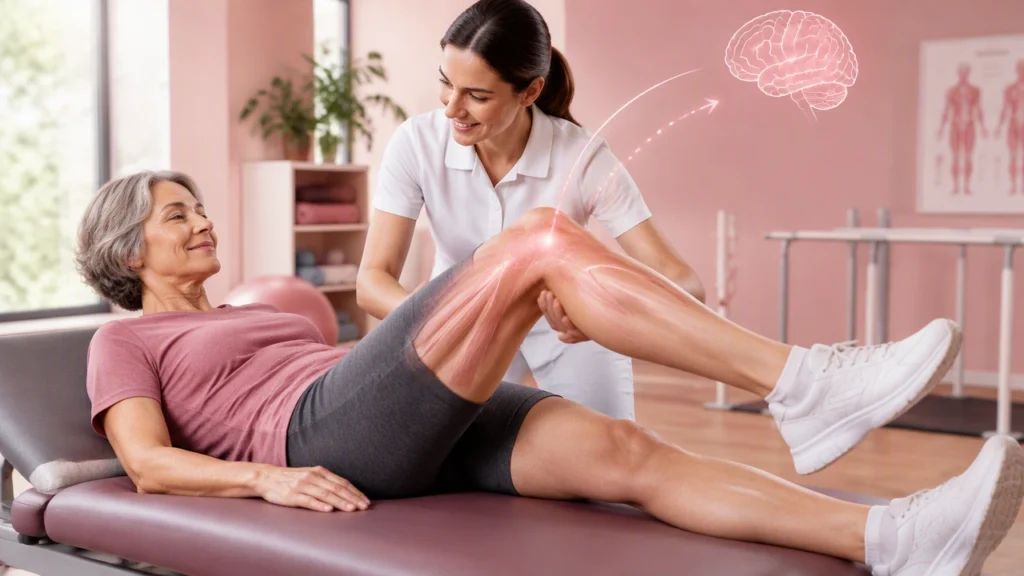
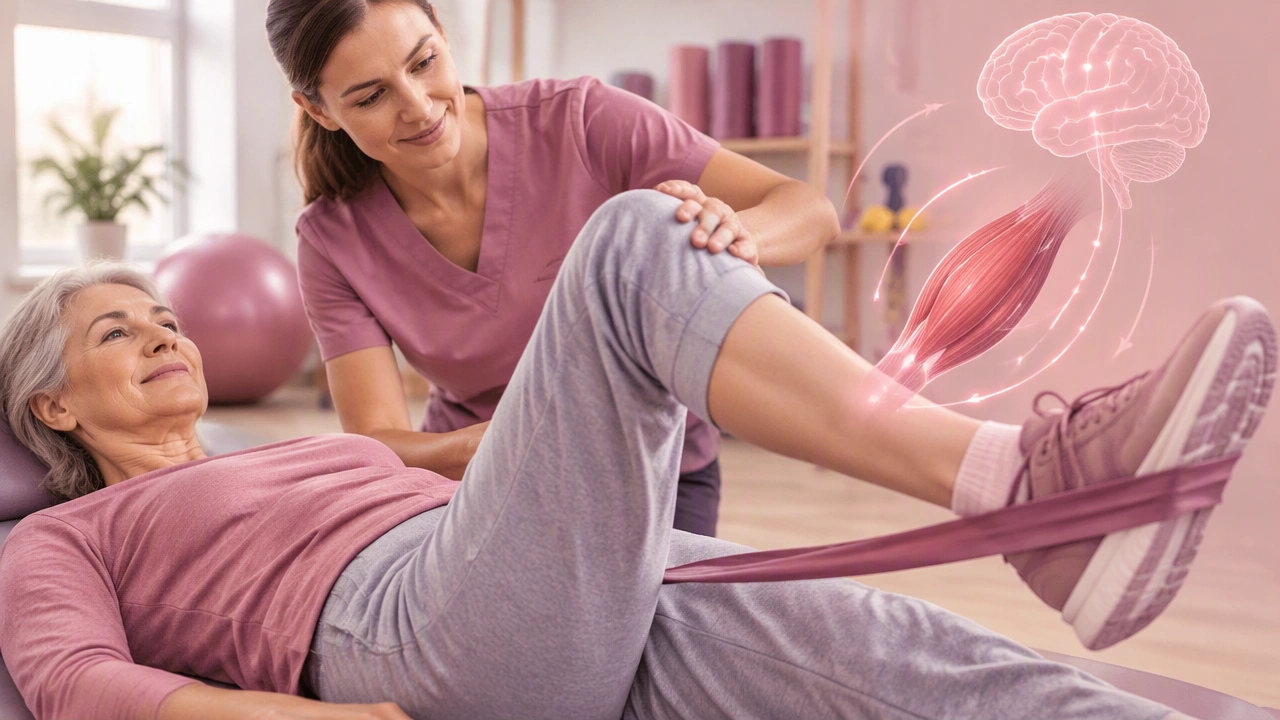
Physiotherapy begins with a simple observation: the body already knows more than it can immediately access. After knee or hip surgery, a person may understand exactly how to bend the joint, yet the movement feels unfamiliar, weak, or hesitant. The problem is rarely a lack of information. It is a change in communication between the brain, nerves, muscles, and joints. Rebuilding that communication is the work of motor memory and neuromuscular re-education.
Surgery and immobilization interrupt practiced patterns. Swelling alters sensory signals, protective muscle inhibition reduces activation, scar tissue can restrict range, and pain encourages compensatory movement. Over days or weeks, the nervous system adapts to these new conditions. It may favor guarding, shortened steps, or reduced loading. Those adaptations are protective in the short term, but they can become the default pattern if they are not gradually retrained.
What motor memory means in rehabilitation
Motor memory does not mean that a muscle stores a movement the way a notebook stores a sentence. It refers to learned motor patterns that become easier to perform through repeated, meaningful practice. Each attempt provides the nervous system with feedback about timing, force, balance, and position. With consistent practice, the sequence becomes more efficient and less dependent on constant conscious attention.
This is why rehabilitation is not simply a list of exercises. The quality of each repetition matters. A controlled sit-to-stand that teaches the hip to extend through a safe range may be more useful than many rushed repetitions that reinforce gripping or twisting. The goal is to give the nervous system a clear, repeatable signal: this is the intended path, this is the required timing, and this load is tolerable.
Why surgery changes the movement signal
After knee or hip surgery, several factors can change how movement feels. Swelling may reduce proprioception, the body’s awareness of joint position. Pain can inhibit the quadriceps or hip abductors, making muscles feel slow to switch on. Limited range may prevent a familiar pattern from completing normally. Assistive devices such as crutches or a walker change balance and weight distribution. Even the surgical incision can influence how confidently a person loads the limb.
The nervous system responds by protecting the area. Protective responses are useful, but they can also produce habits such as avoiding full knee bend, shifting weight to the opposite leg, or using the back to compensate for weak hip muscles. Neuromuscular re-education addresses these habits by restoring reliable activation, coordination, and control before speed or complexity is added.
The principles behind effective re-education
- Start with clear sensory input. Touch, visual feedback, joint positioning, and simple cues help the brain locate the limb and understand the intended movement.
- Build activation before load. Isolated contractions and gentle range work can re-establish communication before heavier strengthening begins.
- Repeat with attention. Focused practice helps the nervous system compare attempts and refine the pattern.
- Progress in small steps. Range, resistance, speed, and balance demands change gradually so the movement remains accurate.
- Transfer to daily life. A pattern is useful only when it appears in walking, stairs, dressing, and other functional tasks.
From early activation to coordinated movement
Restoring the basic signal
In the early phase, the emphasis is often on comfortable movement, swelling management, and muscle activation. A therapist may guide a person to straighten the knee, gently contract the quadriceps, or engage the hip muscles while keeping the trunk stable. These activities reacquaint the nervous system with muscles that may feel quiet or difficult to control.
Feedback is important here. Watching the movement, feeling the muscle contract, or using a towel under the knee can make the target clearer. The point is not to force a perfect result. It is to create a reliable association between intention and action.
Adding range and rhythm
Once activation is consistent, movement becomes more continuous. Knee bends, hip hinges, weight shifts, and controlled step-ups introduce rhythm and sequencing. The body must coordinate several joints at once while keeping balance. Repetition in this stage helps the pattern become familiar enough to survive distraction, fatigue, or a busy environment.
Reintroducing strength and balance
Strength work is also part of motor learning. When a muscle can produce force through the required range, the nervous system gains more options. Balance challenges, uneven surfaces, and dual-task activities ask the person to maintain the pattern while responding to changing conditions. This is where rehabilitation moves from isolated control to real-world movement.
How practice is structured
Effective practice is specific but not monotonous. A therapist may vary the surface, tempo, direction, or level of assistance while keeping the essential pattern intact. Walking drills can progress from flat ground to curbs and stairs. Sit-to-stand practice can move from a high seat to a more demanding height. Hip control can be challenged during reaching or carrying tasks.
Frequency matters as much as intensity. Short, regular sessions often support learning better than occasional exhausting efforts. Fatigue can reduce precision, and pain that lingers long after exercise may signal that the dose was too high. The aim is steady exposure with enough challenge to encourage adaptation and enough control to protect quality.
Pain, swelling, and the pace of progress
Pain is information, not a verdict. Some discomfort during rehabilitation can be expected, but sharp or rapidly increasing pain deserves attention. Swelling can blunt proprioception and make movement feel less certain, so managing it is part of re-education. Rest, elevation, appropriate compression, and pacing are not passive alternatives to exercise; they help create conditions in which practice can be learned.
Progress is rarely linear. A good day may be followed by a stiff morning or a flare after increased activity. These fluctuations do not erase previous learning. The nervous system retains the general pattern, and returning to a familiar level of practice usually restores confidence more quickly than starting over.
The role of the physiotherapist
A physiotherapist observes more than range of motion. They assess how the trunk, hip, knee, ankle, and opposite limb work together. They identify whether a limitation comes from tissue tolerance, strength, balance, fear, or a movement habit. From there, they select exercises that match the current stage and adjust the difficulty as control improves.
Education is part of the process. Understanding why a movement feels awkward can reduce frustration and make practice feel purposeful. Clear goals, measurable milestones, and home exercises that fit daily routines all support adherence.
Rebuilding trust in movement
Motor memory returns through experience. Each safe repetition tells the body that the joint can move, accept load, and recover without threat. Over time, movements that once required careful thought become more automatic. Walking lengthens, stairs become smoother, and the limb feels more present during everyday activity.
The process is patient work. Surgery may alter tissues, but neuromuscular re-education helps the brain organize those tissues into usable patterns again. With thoughtful progression, consistent practice, and attention to the signals the body provides, movement can be rebuilt into something reliable, confident, and sustainable.