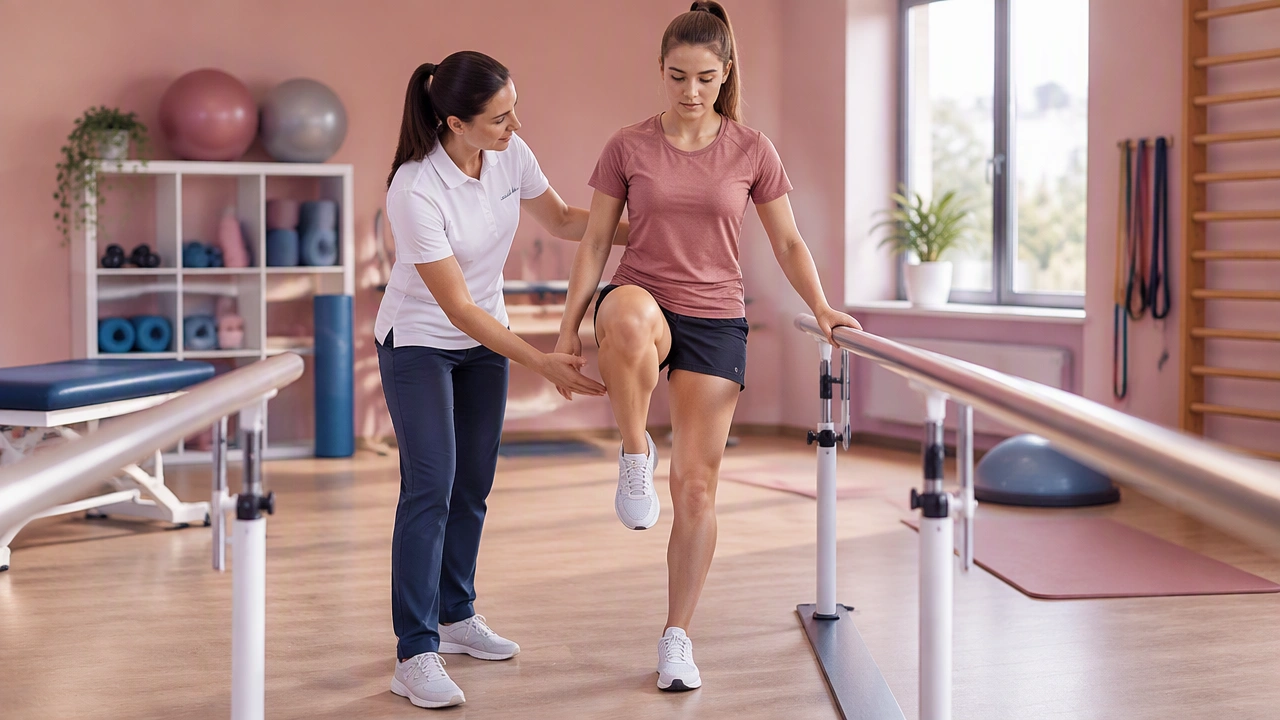
A 24-year-old recreational footballer is seven weeks after ACL reconstruction and walks without crutches, yet the knee still feels hesitant on stairs and when changing direction. How would you structure the next phase of rehabilitation? Start by clarifying the surgeon’s restrictions, healing timelines, and any graft-specific precautions. Then examine the movement you can observe: Is the person avoiding knee loading, using hip substitution, or guarding because of swelling and pain? Build a plan that connects impairments to function. Strength work for the quadriceps, hamstrings, glutes, and calf can progress from isometrics to controlled eccentrics and then to higher-load patterns. Add balance tasks that challenge single-leg stance, then introduce sagittal-plane hopping before rotational demands. Pain and swelling remain useful guides, but they should not replace clear milestones such as symmetry, control, and confidence. Discuss how you would educate the patient about setbacks, how often you would review the plan, and which outcome measures best show whether movement is genuinely being rebuilt rather than merely compensated.