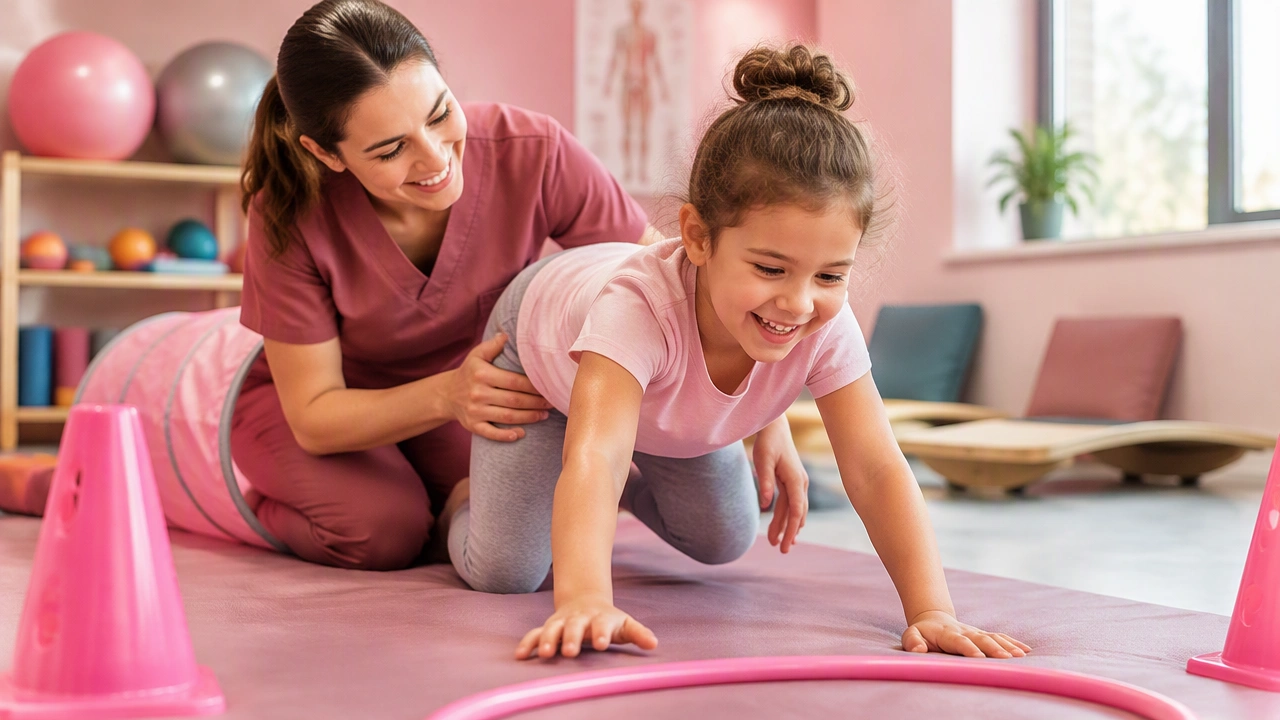
Play-Based Physiotherapy: Rebuilding Movement Through Joy
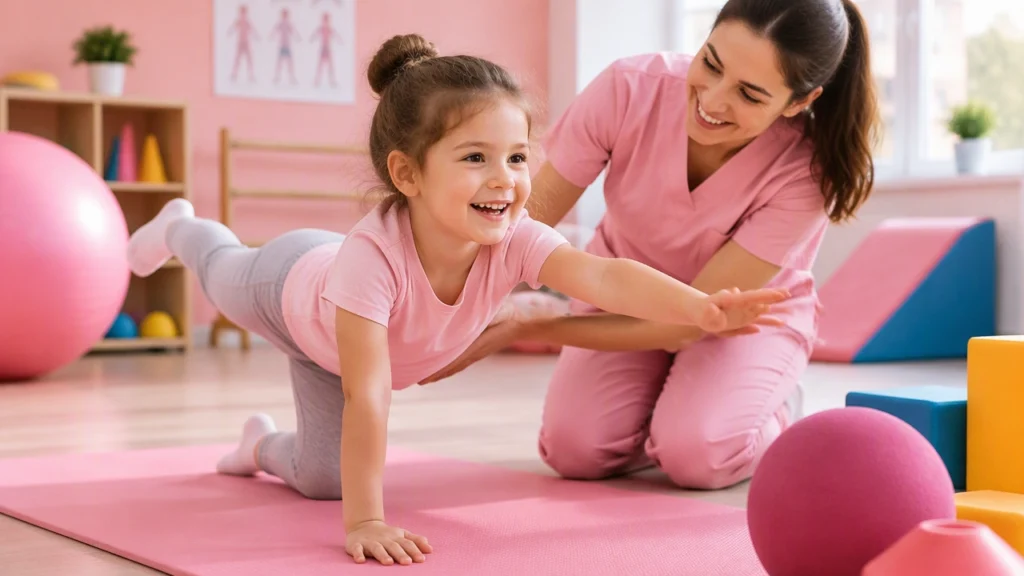
Physiotherapy for children works best when it feels less like treatment and more like play. Play-based rehabilitation turns therapeutic exercises into engaging activities so children can develop motor skills naturally, with curiosity guiding repetition and joy making practice sustainable. For families navigating developmental delays, this approach offers a clear path: meaningful movement can be built through games, exploration, and everyday routines.
Why play is central to pediatric rehabilitation
Children learn movement by trying, failing, adjusting, and trying again. When a toddler stacks blocks, crawls under a table, or balances along a pavement line, the nervous system is mapping relationships between vision, balance, strength, and timing. Play provides a rich sequence of these challenges without the pressure of formal exercise.
In pediatric rehabilitation, play is not a distraction from therapy. It is the medium through which movement becomes meaningful. A child who reaches for a favorite toy practices shoulder control. A child who crawls through a tunnel builds trunk stability. A child who kicks a soft ball develops coordination between the trunk, hips, and legs. The same physical principles used in structured exercise are present, but they are wrapped in a purpose the child understands.
This matters for motivation. Repetition is essential for motor learning, yet children are unlikely to repeat a movement that feels枯燥 or difficult without context. When the goal is to knock down pins, feed a pretend animal, or complete an obstacle course, repetition becomes part of the story rather than a demand.
What play-based movement learning looks like
A session may appear simple from the outside, but each activity is carefully chosen. The physiotherapist observes how a child moves, identifies limiting factors, and adapts the environment to encourage a specific pattern. The child experiences a game; the clinician sees opportunities for strength, balance, or coordination.
Common elements include:
- Clear, achievable goals: the child understands what success looks like, such as placing a ring on a post or rolling a ball into a target.
- Gradual challenge: surface stability, distance, speed, or distractions are adjusted so the task remains possible but demanding enough to promote learning.
- Visual and sensory cues: colored spots, textured mats, sounds, and rhythm help children organize movement.
- Frequent success: short wins maintain engagement and build confidence before more difficult variations are introduced.
- Functional transfer: skills practiced in play are connected to daily activities such as standing, walking, dressing, or participating in school.
This is pediatric rehabilitation play-based movement learning for developmental delays in practice: specific impairments are addressed through activities that respect the child’s age, interests, and emotional state.
How movement is rebuilt step by step
Motor development does not follow a single perfect line, and rehabilitation rarely does either. Progress is usually built in layers.
1. Observe and understand the starting point
The physiotherapist assesses posture, range of motion, muscle activity, balance, and the way the child organizes whole-body movement. Just as importantly, the clinician considers what motivates the child and what feels overwhelming. Some children seek speed and impact; others need quiet spaces and predictable routines.
2. Create the right challenge
If a movement is too hard, the child compensates or disengages. If it is too easy, little change occurs. The right challenge sits between success and struggle. A child working on standing balance might first hold a therapist’s hands while popping bubbles, then use one hand for support, then reach across the body for a sticker while standing beside a stable surface.
3. Repeat with variety
Repetition builds skill, but identical repetition can become mechanical. Play allows the same movement pattern to appear in different contexts. Reaching may happen while grabbing a puppet, placing a block, or pulling a ribbon from a box. Variety encourages the child to adapt the skill rather than memorize one sequence.
4. Connect skill to everyday life
A new ability matters when it appears outside the clinic. Practicing sit-to-stand through a musical chair game prepares a child for getting up from the floor at home. Working on foot placement on colorful lines supports safer movement in hallways and playgrounds. The therapist and caregivers plan ways to carry progress into real routines.
5. Review and adjust
Development changes quickly. Activities are revisited, difficulty is increased, and goals are updated as the child grows. Progress may be measured through movement quality, endurance, participation, or independence in daily tasks rather than a single isolated test.
Conditions that benefit from playful practice
Play-based approaches can support children with a wide range of needs, including gross motor delay, cerebral palsy, Down syndrome, developmental coordination disorder, acquired brain injury, and movement difficulties associated with illness or prolonged inactivity. The method is adaptable because it focuses on function rather than a diagnosis alone.
For children with neurological conditions, guided play can encourage more symmetrical trunk use, improve selective control, and reduce reliance on inefficient compensations. For children with coordination challenges, predictable games may strengthen timing and spatial awareness. For children returning after injury, playful tasks help restore confidence alongside physical capacity.
The role of families and communities
Rehabilitation is most effective when it is not confined to appointment days. Caregivers do not need to recreate formal therapy sessions, but they can embed movement into ordinary moments. Walking along cracks in the pavement, carrying lightweight laundry, dancing to one song, or watering plants with a small watering bag all provide purposeful practice.
Community settings offer additional opportunities. Parks, schools, and play groups expose children to varied surfaces, social demands, and unpredictable movement problems. These environments make skills more resilient because the child learns to adapt rather than perform only under clinic conditions.
Communication between physiotherapists, families, teachers, and other professionals keeps goals aligned. A shared focus prevents overwhelming the child with too many competing demands and helps everyone recognize small but important improvements.
What progress can look like
Progress is not always a dramatic milestone. It may appear as a child standing for ten seconds longer, using one hand instead of two for support, choosing to join a game they previously avoided, or recovering more quickly after a loss of balance. These changes show that movement is becoming safer, more efficient, and more integrated into daily life.
Play also supports emotional dimensions of rehabilitation. Children develop confidence when they discover that their bodies can produce desired effects. They learn persistence without fear of failure, and they begin to see movement as something enjoyable rather than corrective. Over time, this attitude can protect long-term engagement.
A calm, practical approach to lasting change
Play-based rehabilitation is evidence-informed, structured, and deeply respectful of childhood. It combines clinical observation with creative activity, ensuring that each game serves a purpose while still feeling natural to the child. Families are partners in the process, helping transfer skills into home, school, and community life.
By treating movement as something to explore rather than endure, pediatric physiotherapy makes practice engaging and sustainable. The result is not simply stronger muscles or better balance, but a child who can participate more freely, learn alongside peers, and approach new physical challenges with curiosity and confidence.