Return-to-Sport Testing: When Are You Ready to Resume Full Training?
Returning to training after a major injury is one of the most demanding phases of physiotherapy education and practice. Athletes often feel ready long before their tissues, movement patterns, and confidence have fully adapted. Return-to-sport testing provides a structured way to replace guesswork with measurable evidence, helping clinicians and athletes decide when full training can safely resume.
Why readiness is more than calendar time
Time since surgery matters, but it is only one piece of the decision. An athlete may reach the six-month mark yet still demonstrate weakness, poor landing mechanics, or reduced confidence. Conversely, another athlete may progress faster in some areas while still needing work in others.
Return-to-sport testing criteria after anterior cruciate ligament reconstruction therefore focus on function rather than dates alone. The aim is to assess whether the body can tolerate the forces, speed, and unpredictable demands of sport without unnecessary risk.
What objective testing measures
Objective tests turn movement into information. Common areas of assessment include:
- Strength: quadriceps and hamstring strength, often compared with the uninjured side
- Power: the ability to produce force quickly during jumps and sprints
- Movement quality: landing, cutting, and change-of-direction mechanics
- Symmetry: differences between limbs during single-leg tasks
- Endurance: the ability to maintain performance through repeated efforts
- Psychological readiness: confidence, fear of reinjury, and trust in the limb
No single test tells the whole story. A score is most useful when it is interpreted alongside the athlete’s sport, position, training history, and overall recovery journey.
Common tests used in rehabilitation
Strength testing
Isokinetic dynamometry or calibrated strength equipment can quantify quadriceps and hamstring force. These measurements are valuable because athletes often overestimate their strength based on feel. Comparing the injured limb with the uninjured limb highlights residual deficits that may not be obvious during everyday movement.
Jump and hop assessments
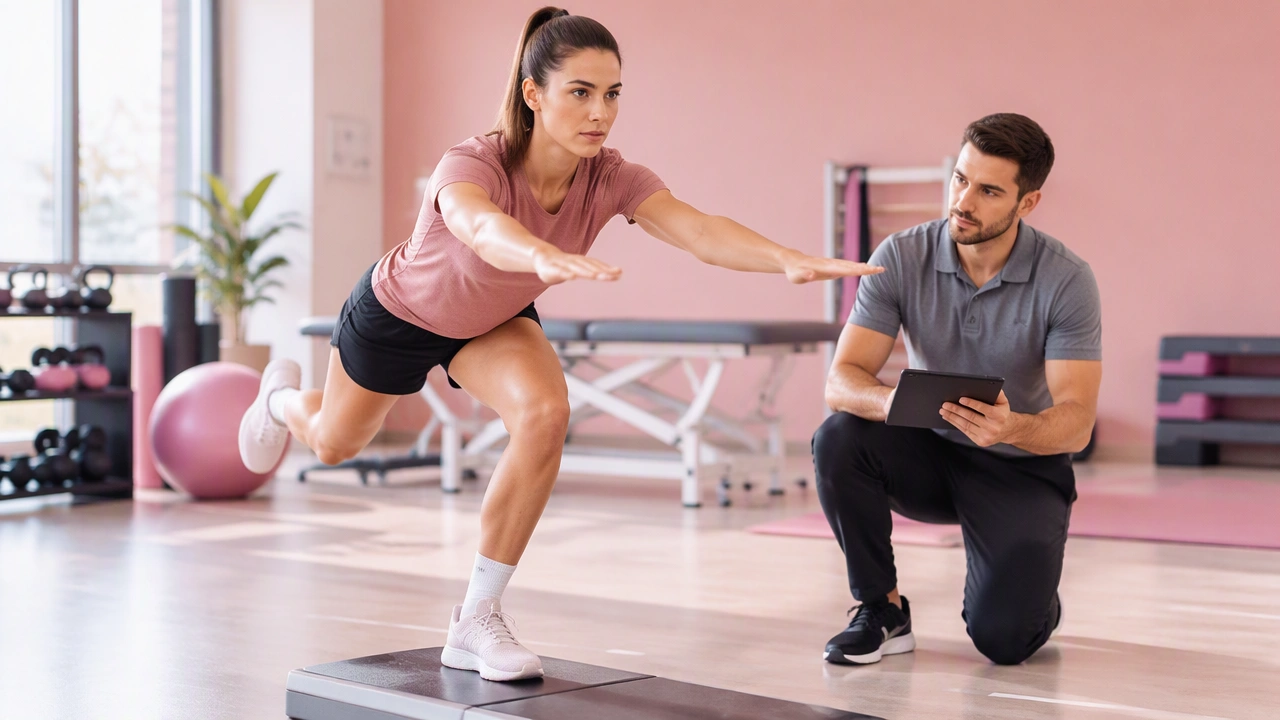
Tests such as single-leg hops, drop jumps, and timed hop tests evaluate power, control, and symmetry. The quality of each repetition matters as much as the distance or speed achieved. A technically poor jump can reveal compensations that increase stress on other joints.
Agility and change of direction
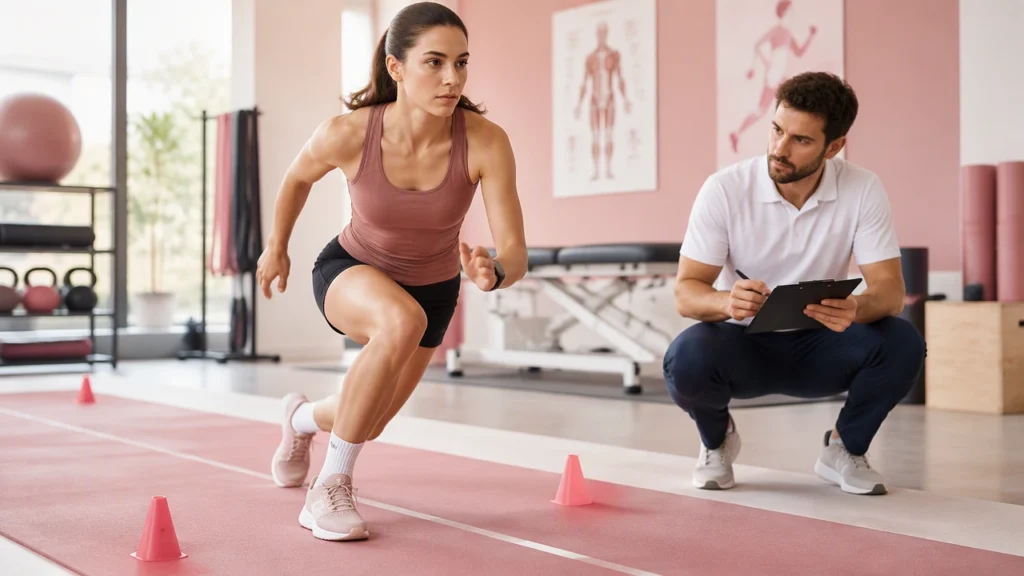
Sport rarely happens in straight lines. Cutting, deceleration, and reactive movement tests examine whether an athlete can control momentum and redirect safely. These tasks also show how well the athlete responds under time pressure rather than during slow, predictable drills.
Field-based conditioning
Repeated sprint tasks or sport-specific drills help determine whether conditioning is sufficient for practice demands. Fatigue can alter technique, so testing under realistic load exposes risks that may appear only late in a session.
Psychological readiness
Confidence questionnaires and structured conversations help identify fear of movement or reinjury. Physical capacity without trust can still lead to hesitation during competition. Psychological readiness is not a weakness to hide; it is information to guide the next stage of training.
How clinicians interpret the results
Thresholds vary by sport, position, and testing method. Clinicians generally look for several signals at once: acceptable limb symmetry, strong absolute performance, controlled movement quality, and sufficient confidence. Relying on a single percentage can be misleading, especially when both limbs are affected by deconditioning.
The decision is also contextual. A basketball player who must repeatedly jump and land needs different evidence from a distance runner. A decision-making sport may require reactive agility and cognitive load, while an endurance sport may prioritize sustained output and efficient mechanics.
Building a graduated return
A successful return is usually a progression rather than a single green light. Testing can confirm readiness to begin full training, but the transition still requires monitoring.
A typical pathway may include:
- progressing from controlled practice to full-speed practice
- introducing competitive drills with limited contact or risk
- monitoring swelling, pain, fatigue, and confidence after sessions
- adjusting volume when performance declines or compensation appears
Each step gives clinicians more information about how the athlete responds to real training loads. If symptoms emerge, the plan can be refined instead of forcing an all-or-nothing choice.
Common mistakes to avoid
One common mistake is treating a good test score as permanent permission. Capacity can change if training intensity drops, fatigue accumulates, or an athlete experiences a setback. Another mistake is comparing only limbs when both sides have lost capacity during rehabilitation.
Some athletes also focus too heavily on returning on a specific date. Dates are useful for planning, but they should not replace functional evidence. The safest approach is to combine time, tissue healing, objective performance, and the athlete’s lived experience.
The role of education and communication
Understanding the purpose of each test helps athletes engage with the process. When people know what a hop test measures or why symmetry matters, they are more likely to notice progress and respond honestly to limitations. This shared language supports better decisions between athlete, clinician, coach, and medical team.
Clear communication also reduces pressure. An athlete who understands that readiness is being measured across several domains is less likely to interpret a cautious recommendation as a lack of confidence.
Moving forward with evidence
Return-to-sport testing is not a pass-or-fail ritual. It is a structured conversation between data and context. By combining strength, power, movement quality, conditioning, and psychological readiness, clinicians can make decisions that respect both performance ambitions and long-term joint health.
The goal is not simply to return quickly. It is to return with enough capacity, control, and confidence to sustain full training and face the unpredictable demands of sport with a stronger foundation.